Cost of Living in Florida 2026: Miami vs Tampa vs Jacksonville vs Orlando
Florida has no state income tax, but the four major metros have very different rent levels, cost of living, and job markets. Here's how they compare for take-home pay.
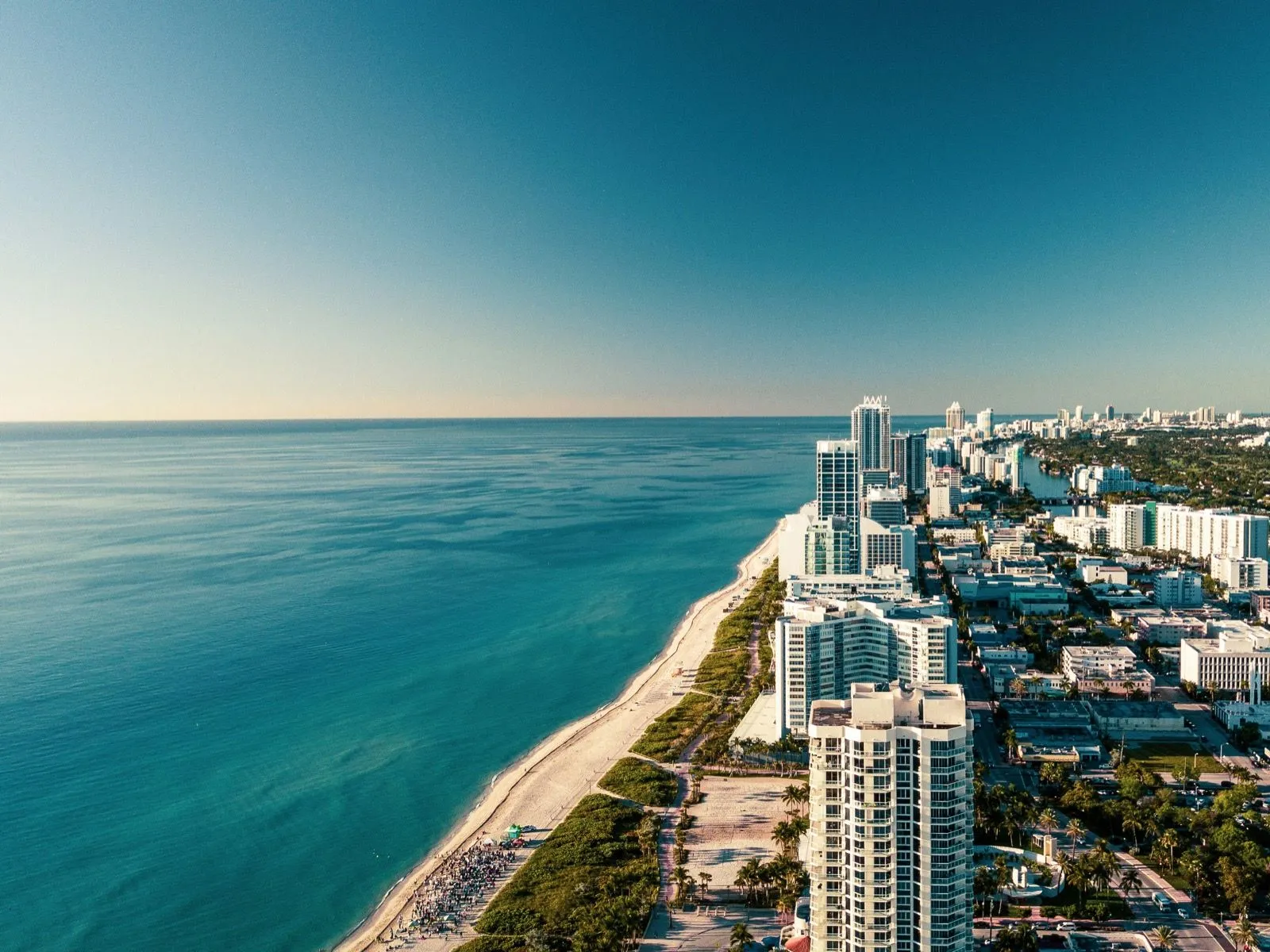
Florida’s no-state-income-tax status makes it one of the most financially attractive destinations for workers relocating from high-tax states. But “moving to Florida” is not a single financial decision — it’s four very different financial decisions, depending on whether you land in Miami, Tampa, Jacksonville, or Orlando.
These four metros share the same tax advantage but diverge significantly on rent, cost of living, salary expectations, and long-term financial outcomes. This guide breaks down the numbers for each.
The Tax Baseline: Identical Across All Florida Cities
Florida levies no personal income tax on wages, salaries, or most passive income. This is the most important financial fact about living anywhere in Florida, and it applies equally across all four metros.
At a $90,000 salary, the state income tax savings versus a high-tax state:
- vs. California (9.3% marginal rate): ~$7,400/year saved
- vs. New York (6.85% state + NYC local): ~$9,200/year saved
- vs. Illinois (4.95% flat): ~$3,900/year saved
- vs. Ohio (3.99% flat): ~$3,100/year saved
This savings is identical regardless of which Florida city you choose. The differences between Miami, Tampa, Jacksonville, and Orlando all come down to rent and cost of living.
HUD Fair Market Rents: The Biggest Differentiator
HUD FY 2026 Fair Market Rents for a 2-bedroom apartment (monthly):
| City | Studio | 1BR | 2BR | 3BR |
|---|---|---|---|---|
| Miami-Fort Lauderdale area | ~$1,995 | ~$2,235 | ~$2,720 | ~$3,620 |
| Tampa-St. Petersburg | ~$1,330 | ~$1,525 | ~$1,850 | ~$2,540 |
| Jacksonville | ~$1,095 | ~$1,270 | ~$1,545 | ~$2,150 |
| Orlando-Kissimmee | ~$1,330 | ~$1,500 | ~$1,845 | ~$2,490 |
Miami’s rent is nearly double Jacksonville’s on a 2-bedroom unit. The annual difference between Miami and Jacksonville is approximately $14,100 — a figure large enough to fully fund a retirement account and then some.
Tampa and Orlando are essentially tied in the mid-range tier, both running roughly $300/month more than Jacksonville and $870/month less than Miami.
Cost of Living Index
BEA Regional Price Parities (national average = 100):
- Miami-Fort Lauderdale-Pompano Beach, FL: approximately 105–108 (above national average)
- Tampa-St. Petersburg-Clearwater, FL: approximately 98–100 (near national average)
- Jacksonville, FL: approximately 95–97 (below national average)
- Orlando-Kissimmee-Sanford, FL: approximately 97–99 (slightly below national average)
Miami’s overall cost of living now exceeds the national average, driven by rent, food, and service prices that have escalated significantly with the post-2020 migration wave. The other three metros remain near or below the national average — making them genuinely good values relative to most major U.S. cities.
Net Income After Tax and Rent: Full Comparison
Here’s how a $90,000 salary plays out in each city, with federal income tax applied (single filer, standard deduction) and 2-bedroom rent subtracted:
| City | Federal Tax (est.) | State Tax | Annual Rent (2BR) | Net Income |
|---|---|---|---|---|
| Miami | $12,900 | $0 | $32,640 | $44,460 |
| Tampa | $12,900 | $0 | $22,200 | $54,900 |
| Jacksonville | $12,900 | $0 | $18,540 | $58,560 |
| Orlando | $12,900 | $0 | $22,140 | $54,960 |
The spread between Miami and Jacksonville is $14,100 per year in net income — purely from the rent difference. Tampa and Orlando are nearly identical and fall in the middle.
At $120,000:
| City | Federal Tax (est.) | Annual Rent (2BR) | Net Income |
|---|---|---|---|
| Miami | $19,700 | $32,640 | $67,660 |
| Tampa | $19,700 | $22,200 | $78,100 |
| Jacksonville | $19,700 | $18,540 | $81,760 |
| Orlando | $19,700 | $22,140 | $78,160 |
Compare any two Florida cities using our full calculator, or explore Miami’s detailed breakdown, Tampa, Jacksonville, and Orlando individually.
Miami: Highest Cost, Highest Salary Potential
Miami is the outlier in the Florida comparison. It has the highest rents, the highest overall cost of living, and — for certain industries — meaningfully higher salaries.
Miami’s economy is built around finance (particularly Latin American-focused banking and asset management), international trade, tourism and hospitality, real estate, and a growing tech presence. For finance professionals, particularly those working with Latin American clients or capital flows, Miami’s geographic and business advantages are unique in the U.S.
For most other workers, Miami requires a salary significantly above the metro average to achieve the same financial outcome as a moderate salary in Tampa or Jacksonville. A software engineer earning $120,000 in Miami takes home roughly $10,000 less per year than the same engineer in Jacksonville — with no career advantage to offset it.
Miami also carries property insurance risk that no table captures cleanly. Hurricane exposure has caused multiple major insurers to exit the Florida market, and homeowners in Miami-Dade County may pay $6,000–$12,000+ per year in insurance. For renters, the landlord bears this cost — but it’s reflected in rent pricing and can affect the overall housing availability.
Miami is the right choice if: You’re in finance, international business, real estate, or entertainment/media; you have a salary above $130,000 that justifies the cost base; or you place premium value on Miami’s unique cultural environment, international character, and lifestyle.
Tampa: Best Balance of Cost and Opportunity
Tampa-St. Petersburg has emerged as Florida’s most balanced option for skilled workers: a genuinely diversified economy, a cost of living near the national average, and a lifestyle that combines urban amenities with beach proximity.
Tampa’s economy is built on finance and insurance (Raymond James, Synovus, MetLife, Citi, TIAA), healthcare (BayCare, AdventHealth, Tampa General), defense and aerospace, and a growing tech sector. The University of South Florida and University of Tampa provide a steady talent pipeline.
Salaries in Tampa are not as high as Miami’s top-end finance roles, but they’re competitive for most professional roles — and the lower rent more than compensates. A $90,000 earner in Tampa nets roughly $54,900 vs Miami’s $44,460.
The lifestyle case for Tampa is strong: downtown St. Pete has become genuinely walkable and culturally rich, the Riverwalk area of Tampa proper has improved significantly, and beach access (Clearwater, St. Pete Beach) is within easy reach. Traffic is a known challenge, but less severe than Miami.
Tampa is the right choice if: You want a balanced financial outcome, live in finance/healthcare/defense/tech, and want urban amenities without Miami’s premium. It’s also a particularly strong choice for families — lower rent means more room for a larger apartment or eventual home purchase.
Jacksonville: Most Affordable Major Florida Metro
Jacksonville is Florida’s largest city by land area and, in 2026, its most affordable major metro for renters. At a 2-bedroom HUD FMR of approximately $1,545/month, Jacksonville runs $1,175 less per month than Miami — an annual difference of over $14,000.
Jacksonville’s economy is concentrated in logistics and distribution (the port), healthcare (Mayo Clinic’s East Coast hub is a major employer), military (Naval Air Station Jacksonville), finance, and increasingly, e-commerce fulfillment. It does not have Miami’s finance density or Tampa’s growing tech sector, but the job market is solid for healthcare workers, logistics professionals, and military-adjacent careers.
Salaries in Jacksonville are generally lower than in Miami or even Tampa for professional roles — but the cost base is low enough that net outcomes are still favorable. Jacksonville also has some of Florida’s lowest property taxes, which matters for eventual homebuyers.
Jacksonville is the right choice if: You work in healthcare, logistics, defense, or a field where location matters less than cost. It’s an excellent choice for families and for anyone prioritizing maximum financial savings over lifestyle amenities.
Orlando: Tourism Economy with Improving Professional Opportunities
Orlando has traditionally been dominated by the tourism and hospitality industry (Disney, Universal, SeaWorld, Marriott, major convention business), but the metro has diversified meaningfully. Lockheed Martin’s aerospace and defense operations, medical device manufacturing, and a growing simulation and technology sector have broadened Orlando’s employment base.
For workers in tourism-adjacent industries, Orlando is a natural fit. For professional workers in other fields, rent and cost of living are essentially identical to Tampa, making the two metros broadly comparable from a financial standpoint. The deciding factor usually comes down to commute patterns, preferred neighborhoods, and where your employer happens to be located.
Orlando is the right choice if: You work in tourism, hospitality, convention, or simulation/aerospace/defense; you want a cost structure similar to Tampa without the water-adjacent lifestyle emphasis; or your employer happens to be in the greater Orlando area.
Housing Affordability: Rent Burden by Salary
One useful metric is the rent burden — what percentage of gross income goes to rent. Below 30% is generally considered the threshold for affordable housing:
| City / Salary | $60,000 | $80,000 | $100,000 |
|---|---|---|---|
| Miami | 65% | 49% | 39% |
| Tampa | 44% | 33% | 27% |
| Jacksonville | 37% | 28% | 22% |
| Orlando | 44% | 33% | 27% |
By this measure, Miami is unaffordable at virtually every salary level for a 2-bedroom apartment. Tampa, Jacksonville, and Orlando cross into the “affordable” zone at $80,000–$100,000.
Which Florida City Is Right for You?
Miami: Highest salaries in specific sectors (finance, real estate, international business). Highest cost, highest rent. Best if your income significantly exceeds the metro median.
Tampa: Best overall balance. Mid-range cost, solid job market, livable lifestyle. The default answer for most workers relocating to Florida.
Jacksonville: Most affordable. Lower salaries, but lower costs more than compensate for most income levels. Best for healthcare workers, families, and anyone maximizing savings.
Orlando: Tie with Tampa on cost. Best for tourism/hospitality/defense workers, or those whose employer is based there.
Explore the full Florida cost of living guide, or see all Florida cities on our interactive map.
Data & Methodology
Rent figures are HUD Fair Market Rents (FY 2026) for each Florida metropolitan statistical area. Cost of living indices are BEA Regional Price Parities (2022 vintage). Tax estimates apply 2026 federal income tax brackets (single filer, standard deduction) with no Florida state income tax. All figures are approximations for comparative purposes. Individual outcomes will vary based on actual rent, employer-specific compensation, and local market conditions.
Ready to compare the numbers yourself?
Try the Comparison Tool