New York vs San Francisco: Which City Should You Call Home?
A comprehensive comparison of New York City and San Francisco covering cost of living, lifestyle, food, careers, nightlife, transit, and more to help you decide which city is right for you.
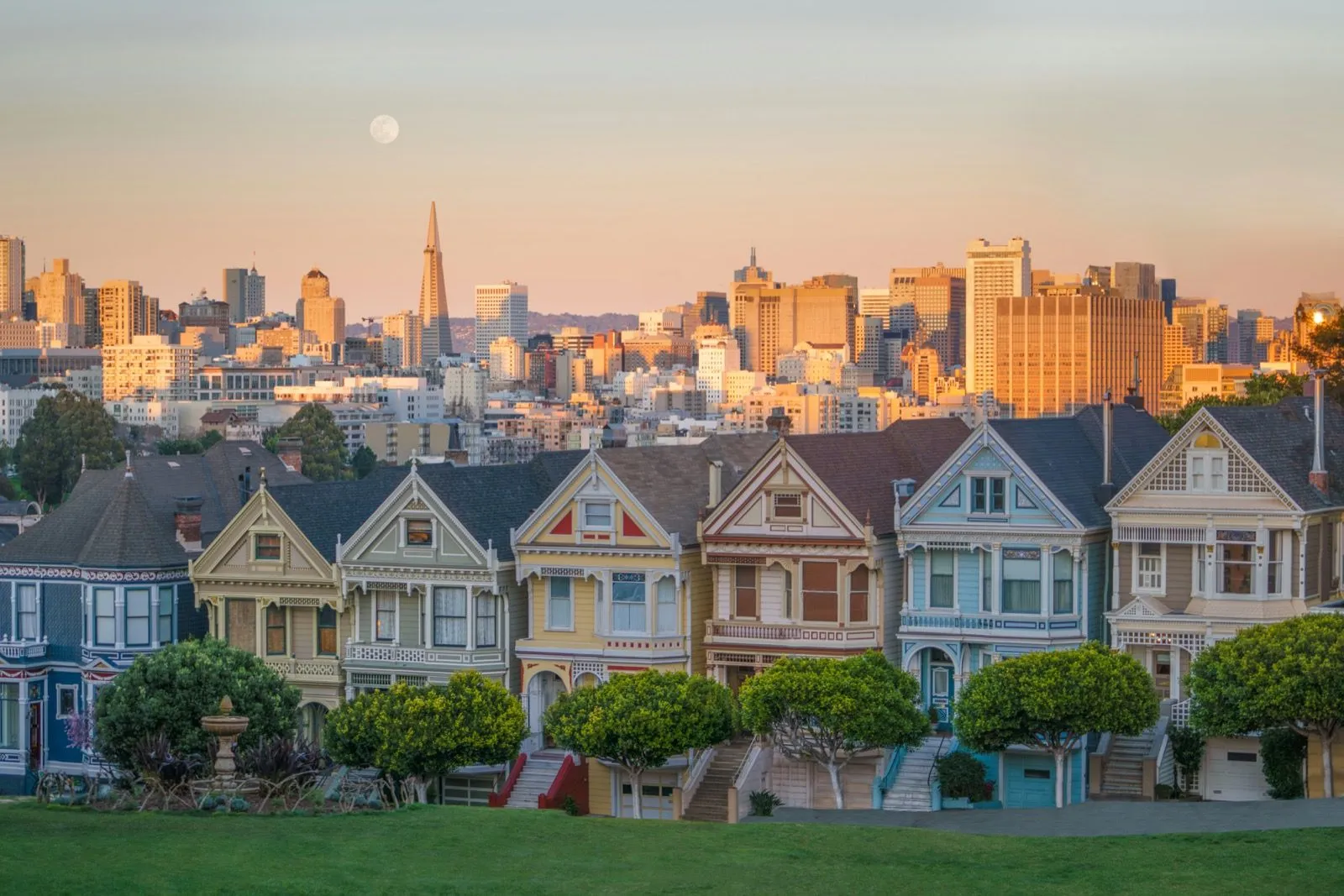
Few debates in American urban life run as deep as New York versus San Francisco. One is the sprawling, vertical metropolis that never sleeps. The other is a compact, fog-kissed peninsula brimming with innovation. Both attract ambitious transplants. Both demand serious financial commitment. But how do they actually stack up?
Cost of Living
Both cities consistently rank among the most expensive in the United States, but the pain hits differently.
In New York, a one-bedroom apartment in a prime neighborhood like Manhattan or Williamsburg runs $3,500 to $4,500 a month. Move to outer Brooklyn or Queens and you’re still looking at $2,500 to $3,500. San Francisco is slightly cheaper on paper — prime one-bedrooms in the Mission or Hayes Valley hover around $2,800 to $3,600 — but there are fewer neighborhoods where rents drop significantly.
When it comes to groceries and dining, New York edges ahead on variety at every price point. A $5 bodega breakfast has no real SF equivalent. San Francisco, on the other hand, benefits from California’s year-round growing season, which means cheaper and more abundant fresh produce. Casual dining tends to skew pricier in SF, while New York offers more budget-friendly options across the board.
On taxes, the two cities are closer than you’d think. California’s state income tax tops out at 13.3%, the highest in the nation. New York’s state tax reaches 10.9%, plus an additional NYC tax of up to 3.876%. For high earners, the combined burden is surprisingly similar. Mid-range earners tend to feel the squeeze more in California.
Bottom line: Both cities will test your budget. New York offers more options at the extremes — live frugally or lavishly in ways SF can’t match — while San Francisco’s costs are more uniformly high.
Lifestyle and Culture
New York is a city of neighborhoods, each with its own personality. From the brownstones of Park Slope to the neon chaos of Times Square, the range is staggering. The cultural infrastructure is unmatched — world-class museums, Broadway, indie galleries, underground music venues — and there’s a palpable energy at all hours that keeps you constantly exposed to new ideas and perspectives. The cultural identity here is one of resilience and directness.
San Francisco packs a lot into just 47 square miles. The Mission, Haight-Ashbury, North Beach, the Castro — each neighborhood tells a story rooted in countercultural history. The arts scene leans toward indie film, experimental theater, and tech-art crossover. What sets SF apart is how deeply nature is woven into daily life: ocean views, park trails, and weekend wine country trips are all part of the rhythm. The cultural identity here is one of openness and wellness.
Food and Dining
New York has arguably the most diverse food scene on the planet. You can go from $1 pizza slices to Michelin-starred tasting menus within a few blocks. Flushing’s dumpling houses, Harlem’s soul food, Little Italy, Koreatown — you could eat a different cuisine every night for a year and never run out of options. The sheer breadth is unmatched.
San Francisco takes a different approach. The farm-to-table movement has deep roots here, and proximity to Napa, Sonoma, and the Central Valley means restaurants have access to exceptional ingredients year-round. The city is also home to the oldest Chinatown in North America, legendary Mission burritos, and world-class seafood — think Dungeness crab and cioppino at Fisherman’s Wharf.
The trade-off: If you care about where your food comes from, SF has the edge. If you want every option imaginable at 2 AM, New York wins without contest.
Outdoor Activities and Weather
This category isn’t even close, and it’s often the deciding factor for people choosing between the two.
San Francisco gives you Golden Gate Park, Lands End, the Presidio, and the Marin Headlands — all minutes from downtown. On weekends you can surf at Ocean Beach, hike through Muir Woods, bike across the Golden Gate Bridge, or drive to Tahoe for skiing. The Mediterranean climate means it rarely drops below 45°F or climbs above 75°F, though the famous summer fog will keep you reaching for layers.
New York has its own green spaces — Central Park, Prospect Park, the Hudson River Greenway, the Rockaways — but the weather is a different story. Summers are hot and humid, regularly hitting the 90s. Winters bring genuine cold, sub-freezing temperatures, and the occasional nor’easter. That said, spring and fall in New York are magical — crisp air, golden light, and the city at its most photogenic.
Verdict: For outdoor access and mild weather, San Francisco is hard to beat. For seasonal drama and the satisfaction of earned sunshine, New York has its own appeal.
Career and Job Market
San Francisco remains the undisputed hub for software engineering, product management, venture capital, and biotech. Senior engineers routinely earn $200K to $400K in total compensation, and the constant churn of startups means new companies and roles appear all the time. The downside is concentration risk — when tech has a rough year, the whole city feels it.
New York’s economy is far more diversified. Finance, media, advertising, fashion, publishing, law, healthcare, real estate, and a growing tech sector all coexist. That industry diversity means more resilience during sector-specific downturns. Entry-level salaries may be lower than SF tech offers, but ceilings in finance and law match up. More importantly, New York gives you more room to pivot between industries without relocating.
Choose SF for pure tech compensation and startup culture. Choose NYC for career flexibility across industries.
Nightlife and Entertainment
New York’s nightlife is in a league of its own. Bars stay open until 4 AM, and on any given night you can choose between dive bars, rooftop lounges, warehouse parties, jazz clubs, and comedy venues. There is genuinely something happening every night of the week, and the city’s reputation as the place that never sleeps is well earned.
San Francisco’s scene is smaller but full of character. Last call comes at 2 AM, and nightlife concentrates in the Mission, SoMa, Polk Street, and the Marina. The cocktail bars and craft beer scene are excellent, and storied venues like The Fillmore and Bottom of the Hill have hosted legendary shows. What it lacks in scale, it makes up for in personality.
Getting Around
New York has the best public transit system in the country. The subway runs 24/7 across all five boroughs, complemented by buses, ferries, Citi Bike, and extreme walkability. You genuinely don’t need a car, and most New Yorkers don’t own one.
San Francisco is functional but comes with caveats. BART connects the city to the East Bay and airport, but Muni buses can be slow and unreliable. The cable cars are iconic but impractical for daily commuting. A growing bike lane network helps, but many residents still own cars for weekend trips to wine country, Tahoe, or Big Sur.
For pure urban mobility, New York wins. For city + road trip flexibility, San Francisco holds its own.
Families and Schools
For anyone with children — or planning to have them — school quality becomes a decisive factor that can override almost every other consideration.
New York City has the largest public school system in the country, with roughly 1,800 schools and over one million students. Quality is wildly uneven across the five boroughs, shaped by neighborhood demographics, funding formulas, and decades of housing policy. The system’s most celebrated feature is its specialized high school track — schools like Stuyvesant High School, Bronx Science, and Brooklyn Technical High School are genuinely world-class and free to attend, though admission is tied to a single competitive exam. For elementary and middle school, the system is more lottery-dependent and neighborhood-driven. Families who can afford it often opt for private school, which runs $40,000–$60,000 per year at established institutions like Dalton, Trinity, and Collegiate. The suburbs are a popular escape route: Westchester County communities like Scarsdale and Bronxville, and New Jersey towns like Summit and Montclair, offer exceptional public schools while remaining commutable to Manhattan via Metro-North or NJ Transit.
San Francisco Unified is smaller (about 50,000 students) and has been one of the more controversial school districts in the country, known for a contentious enrollment lottery system, debates over curriculum, and a board that generated national attention in 2021 for its school renaming process. The selective schools track is less developed than NYC’s, and the lottery system has frustrated many families. Private school culture is strong — families in the Mission, Noe Valley, and Pacific Heights often budget for tuitions comparable to what New Yorkers pay. The suburbs offer compelling alternatives: Marin County schools (Mill Valley, Tiburon, Ross) are among the highest-rated in the state, and the East Bay has strong options in Piedmont and Orinda. Many families who love SF relocate to the suburbs once children reach school age — a pattern so common it has its own demographic shorthand.
Housing Market: Buying vs. Renting
Both cities are deeply unusual housing markets that behave by their own rules.
New York City’s median home price sits around $800,000, but that number masks enormous range. A one-bedroom condo in Williamsburg or the Lower East Side might run $900,000–$1.2 million. A two-bedroom in Park Slope or Astoria can run $1.1–$1.6 million. Manhattan co-ops, which make up a large share of the city’s ownership housing stock, add a layer of complexity: co-op boards have broad authority to approve or reject buyers, require detailed financial disclosure, and often prohibit subletting. Buyers need 20–30% down, proof of substantial liquid assets post-closing, and board approval — a process that can take months and sometimes results in rejection without explanation. The net result is a market with genuine friction that keeps many high-earning professionals renting indefinitely.
San Francisco’s median home price is around $1.2 million, down from its 2022 peak but still among the highest in the country. The city’s housing supply is severely constrained — San Francisco built approximately 2,000 units of new housing per year during the 2010s, against a population that grew by tens of thousands. Proposition 13, California’s landmark 1978 property tax limitation, locks in long-term homeowners and reduces turnover. The result is a market where existing owners benefit from frozen assessed values while new buyers pay full market price. For renters, San Francisco’s rent control (covering units built before June 1979) creates a two-tier market: long-term tenants in controlled units pay dramatically below market rate, while new arrivals compete for uncontrolled units at full market rents. The rent-control dynamic makes some residents extraordinarily reluctant to leave apartments — even when their life circumstances change — because re-entering the rental market means paying current prices.
Neighborhoods Deep Dive
Both cities are made of neighborhoods, each with a distinct character that shapes daily life more than any city-level statistic.
New York:
Park Slope, Brooklyn is the quintessential family neighborhood — brownstones, Prospect Park, the farmer’s market, excellent restaurants along Seventh Avenue, and F/G train access. It’s expensive (two-bedrooms can run $4,000–$5,500/month), but it delivers a quality of life that’s genuinely excellent, especially for families.
Astoria, Queens offers more space, more ethnic diversity, and meaningfully lower rents than Manhattan or north Brooklyn. The food scene is exceptional — Greek, Egyptian, Brazilian, and more. N/W/Q trains get you to Midtown in 20 minutes. It’s one of the city’s best value propositions for someone who works in Manhattan but doesn’t need to live there.
The East Village is for people who want the density, the noise, and the energy of Manhattan street life. It’s loud, fun, full of bars and restaurants, and increasingly expensive — but it delivers the New York experience in its most concentrated form.
San Francisco:
The Mission is the city’s most culturally layered neighborhood — Latino murals, Victorian architecture, exceptional tacos, wine bars, tech workers, and longtime residents navigating the same streets. It has gentrified significantly since 2010 but retains an energy unlike any other SF neighborhood.
Noe Valley is where the Mission goes to calm down. Quieter streets, Victorian homes, excellent coffee, and a disproportionate number of strollers. It’s become deeply family-oriented and expensive — but the character is warm and the microclimate (sheltered from the fog) is one of the city’s best.
The Inner Richmond is underrated and under-touristed. The food is fantastic — some of the city’s best dim sum, Burmese, and Russian bakeries — and rents have historically tracked below comparable neighborhoods closer to downtown. Proximity to Golden Gate Park makes it one of the most livable neighborhoods in the city.
The Verdict: Which City Is Right for You?
There’s no objectively better city — only the city that’s better for you, right now.
- Choose New York if you thrive on energy, variety, and constant stimulation — if you want the deepest job market, the best nightlife, four real seasons, and a life where you never need a car.
- Choose San Francisco if you work in tech, value outdoor access and mild weather, prefer a smaller city with a strong sense of community, and want weekend access to mountains, wine country, and the Pacific coast.
Both cities will challenge you, inspire you, and drain your bank account. The question isn’t which city is better — it’s which version of your life you want to build.
Ready to compare the numbers? Use our salary comparison tool to see exactly how your take-home pay stacks up between New York and San Francisco, factoring in taxes, rent, and cost of living.
Ready to compare the numbers yourself?
Try the Comparison Tool